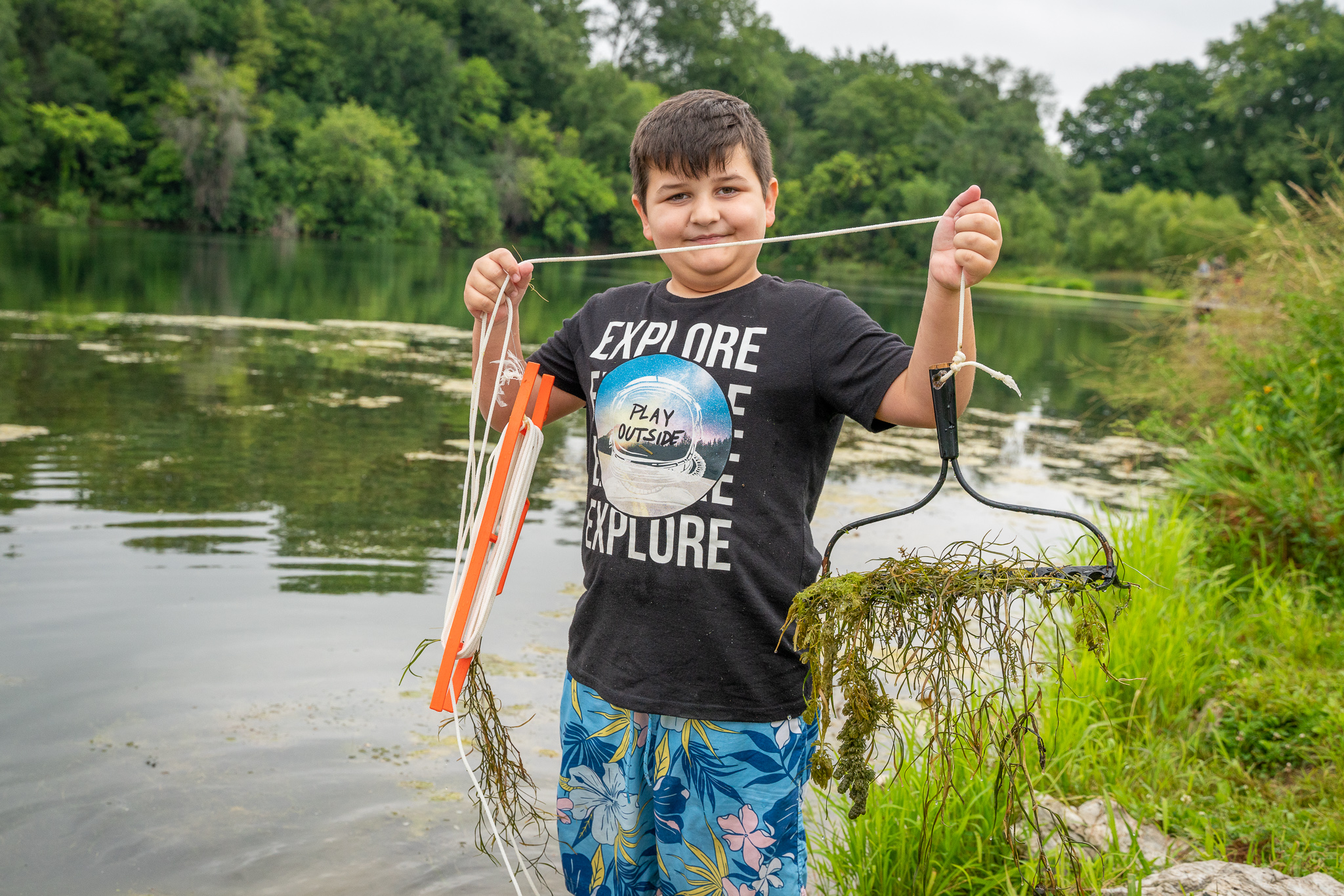
The health of our favorite rivers depends on all of us! Wisconsin’s rivers are vulnerable to invasion by a number of aquatic invasive species (AIS), from Eurasian watermilfoil to Japanese knotweed. The key to successfully protecting our waters is detecting invasives early when it may still be possible to isolate or eradicate them. AIS populations that are detected early require less money and effort to manage.
Volunteers like you are invaluable for early detection and rapid response. If left unchecked, AIS have the potential to reduce the diversity of native organisms, disrupt the food web, and impact recreational activities.
How We Monitor
Project Riverine Early Detectors (RED) has four steps:
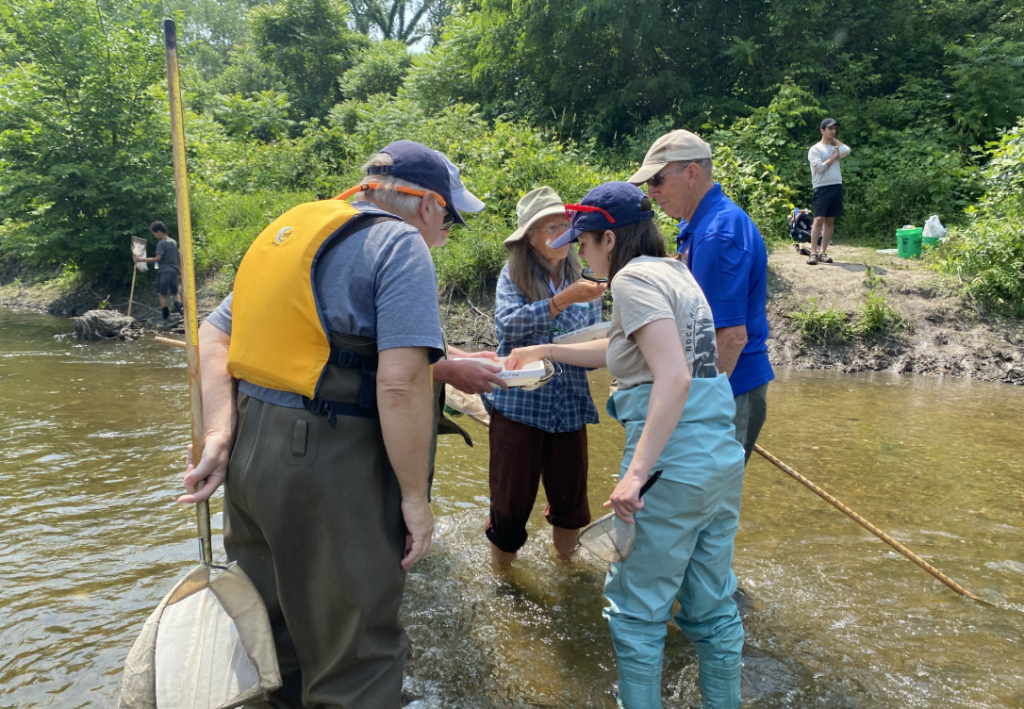
- Visit a section of river or stream, keeping your eyes peeled for invasive species
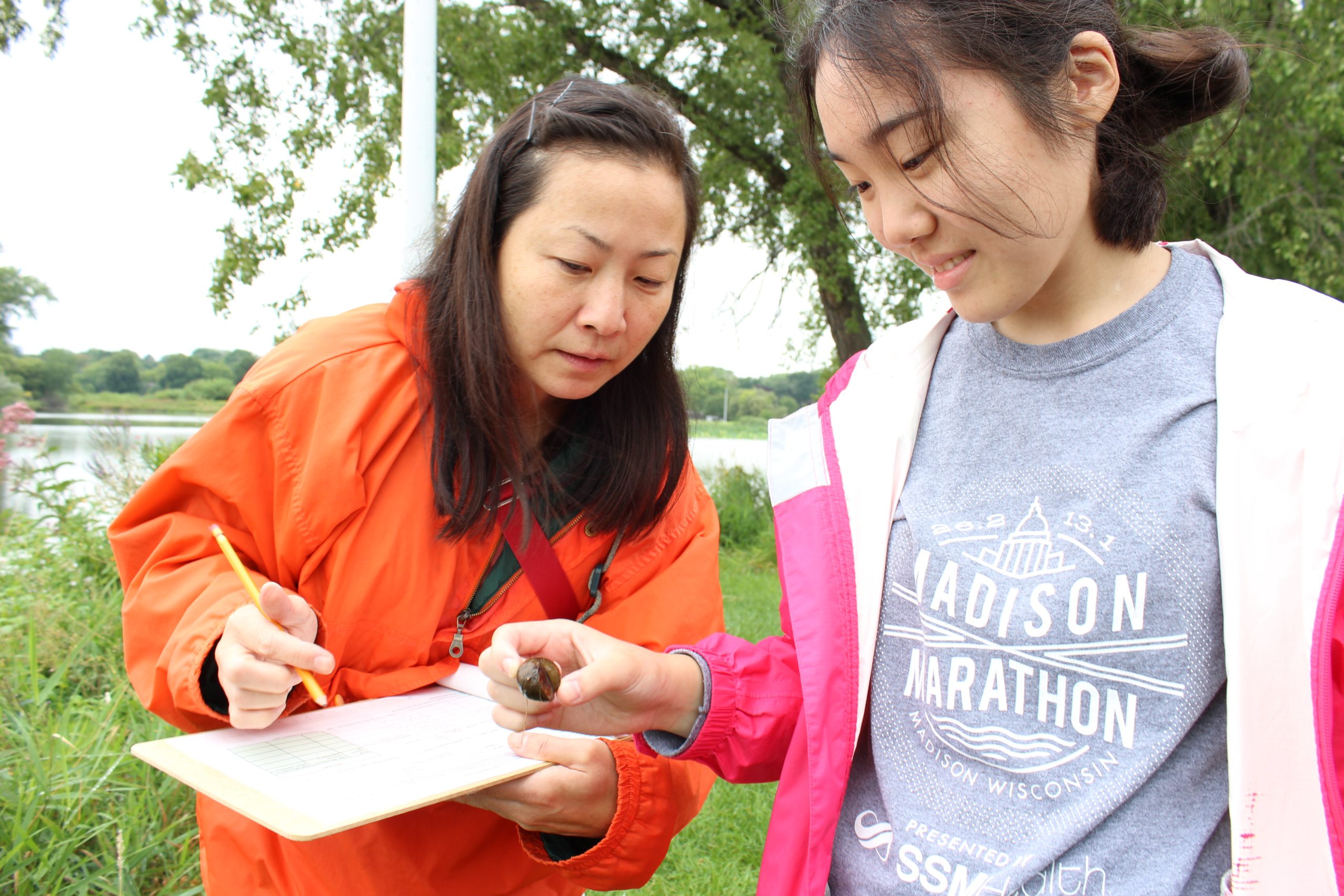
- Collect specimens or photograph suspicious plants and animals
- Verify the specimens
- Share your findings
The University of Wisconsin-Madison Division of Extension, the Wisconsin Department of Natural Resources (WDNR) and local AIS coordinators can help you throughout the process.
Grab your paddle or waders and get out on the water. We need your help!
To attend or host a training in your area contact us via email or check out our events page.
How the Data is Used
Your AIS data is used by local, regional, and statewide staff to:
- Establish baseline data on the statewide AIS distribution in streams.
- Guide response efforts of pioneer populations that are detected early.
- Identify priority locations for AIS monitoring.
Why You Should Join Project RED?
- Easy, fun and flexible protocols to identify species of concern
- Engage new members/volunteers
- Educate local landowners about invasive species
- Online data management tools managed by the Wisconsin DNR
- Species verification by professionals
- Eradication and containment technical support
- It’s free!