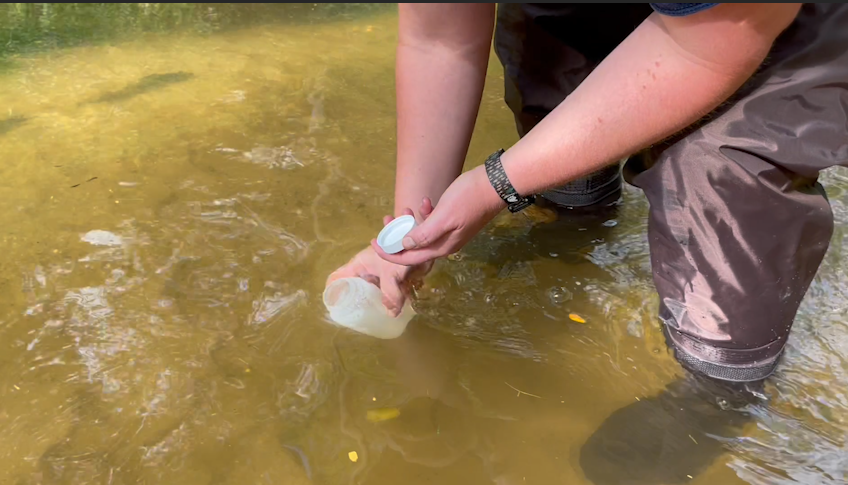
Nutrient monitoring volunteers gather water quality samples once a month from May through October. Volunteers most often collect samples for total phosphorus, but sometimes collect samples for nitrogen and total suspended solids as well. Sites for nutrient monitoring are often special projects areas such as regions with TMDL or 9 Key Element Plans.
Volunteers must be engaged in a local coordinator or DNR-led project, and must have one year of baseline data collection completed in order to begin nutrient monitoring. To express interest in nutrient monitoring, please contact your local WAV Coordinator.
What We Monitor
Phosphorus is an essential nutrient for plants and animals, and also the most visible, widespread water pollutant in Wisconsin. High levels of phosphorus in our lakes and rivers can trigger excess algae and plant growth, leading to dramatic daily swings in oxygen concentrations. These swings can stress aquatic life, and in extreme conditions, lead to fish kills, and cause other significant problems.
Phosphorus is associated with excess sediments covering stream bottoms, the most common biological impairment in streams. On a geological time frame, phosphorus in streams and lakes originates naturally from rocks, but its major sources today are usually associated with human activities: soil erosion, human and animal wastes, septic systems, detergents, and runoff from farmland or lawns.
At times, monitoring sites will be selected for additional nutrient parameters including total suspended solids and nitrogen.
The goal of this monitoring is to characterize the total phosphorus concentrations most commonly occurring in the streams during the primary algae and aquatic plant “growing season” of May through October.
