
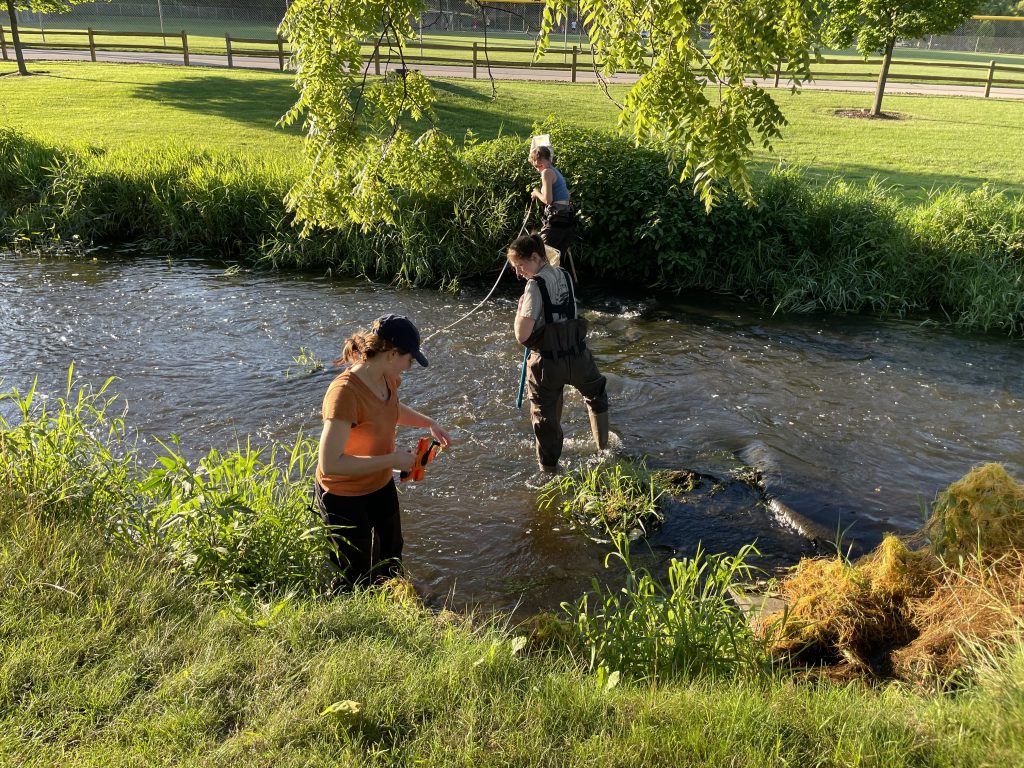
*Must be a returning WAV volunteer (at least 1 year of WAV monitoring experience).
Current WAV volunteers may be interested in completing a habitat assessment at the stream site(s) they already monitor.
A habitat assessment combines visual observation and in-stream measurements to assess the quality of the stream’s habitat for fish and other aquatic life. It’s a valuable screening tool that can identify stressors, such as bank erosion, and potential restoration opportunities.
What is Measured
The goal is to assess seven physical habitat characteristics that impact a healthy fish community:
- Width of undisturbed riparian vegetation along the stream
- Extent of erosion along the stream banks
- Extent of fine sediments covering the stream bed
- Amount of pool habitat available for fish
- Amount of cover available for fish
- Frequency of riffles or bends (habitat diversity)
- The width-to-depth ratio (wide and shallow stream vs. narrow and deep stream)
How the Data is Used
All Water Action Volunteers data is entered into the Wisconsin Department of Natural Resources (DNR) Surface Water Integrated Monitoring System (SWIMS) database. The SWIMS database is used by DNR staff to enter and search for water quality monitoring information for assessing the health of our state’s waters and to guide water protection and restoration decision-making. The database is also linked directly to the DNR’s Surface Water Data Viewer online mapping tool.
Datasheet & Methods
Datasheet
WAV Stream Habitat Assessment Datasheet (New in 2026)
The WAV method is designed for smaller wadeable streams that are less than 33 feet (10 meters) wide. Use our new, all-in-one worksheet and datasheet to measure and calculate your final ratings for each habitat parameter. You will only enter your final ratings and fieldwork comments in the SWIMS database.
Methods
WAV Habitat Assessment Training Guide
Before you conduct a habitat assessment, review our training guide to understand the full process, timing, and best practices to safely and properly assess a length of stream for fish habitat.
WAV Stream Habitat Factsheet
Our factsheet describes some of the key concepts behind stream habitat, and differences between rocky and smooth bottom streams.