
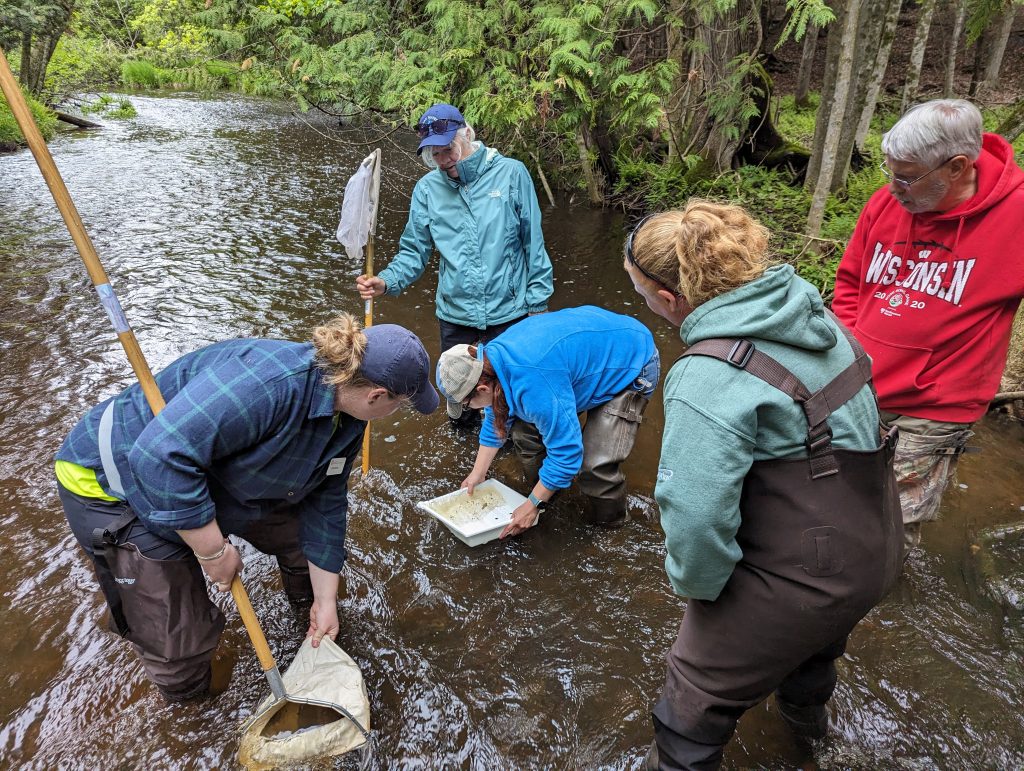
Baseline volunteers visit the same stream site once a month from May to October to gather baseline information about the health and water quality of the stream. With multiple years of consistent baseline data, we can better detect changes to the stream’s water quality from land use changes or restoration efforts.
What is Measured
The goal is to assess six elements of stream health using scientific tools and techniques:
- Dissolved oxygen – aquatic life depends on it.
- Water temperature – affects oxygen demand
and can limit creatures’ survival. - Transparency – too many suspended particles
in the water can be harmful to aquatic plants
and other organisms. - Streamflow – the amount of flowing water in
a stream is an important habitat limitation. - Stream macroinvertebrates – insects, worms,
crustaceans, clams and other small, boneless
creatures that are visible without the aid of a
microscope are used to assess water quality
based on their tolerance to conditions. - Aquatic invasive species – introduced organisms
can cause economic or environmental harm
and disrupt the aquatic food web.
How the Data is Used
All Water Action Volunteers data is entered into the Wisconsin Department of Natural Resources (DNR) Surface Water Integrated Monitoring System (SWIMS) database. The SWIMS database is used by DNR staff to enter and search for water quality monitoring information for assessing the health of our state’s waters and to guide water protection and restoration decision-making. The database is also linked directly to the DNR’s Surface Water Data Viewer online mapping tool.
Datasheets & Methods
Datasheets
Use this datasheet for all Baseline Monitoring parameters and some Special Projects Monitoring parameters. Print your datasheet to take to the stream or fill out the datasheet on a digital device (just remember to download and save the file first!).
WAV Baseline Monitoring Datasheet
English | Español
Want more space to write or need larger text? Use our large text version of the WAV Baseline Monitoring Datasheet (3 pages).
Optional: Large Text Version – WAV Baseline Monitoring Datasheet
Methods
Baseline Stream Monitoring Calendar
English | Español
Be on the lookout for four key aquatic invasive species while conducting your stream monitoring, to help prevent the spread of these organisms in Wisconsin. If you suspect you’ve found an aquatic invasive species, follow the steps in this factsheet to identify, document and report your find!
Baseline Monitoring AIS Factsheet
English | Español
Optional resource:
Interested in understanding the math behind WAV’s streamflow float method? Calculate streamflow by hand using this worksheet! Remember that the float method consistently overestimates streamflow by 24%, so you will need to account for this difference if you use the worksheet.